

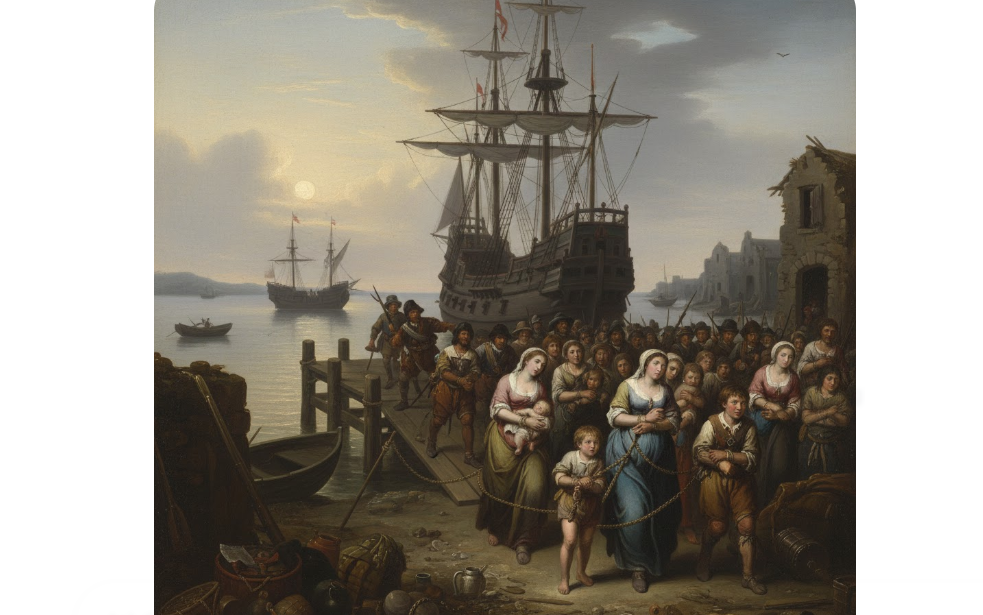
Irish slaves are an unfortunate part of our Irish history. Here’s how it happened, and it is time that we remembered this tragedy ad spoke more of it.
The Sack of Baltimore, 1631 – a forgotten Irish injustice
Most of us grew up learning about Irish people being forced off their land, starved, transported, or sent into exile. What we didn’t learn is that Irish men, women and children were once dragged from their beds and sold into slavery — not in some distant land, but from a small village in West Cork.
In June 1631, the village of Baltimore, near the Old Head of Kinsale, was wiped out in a single night. Over 100 people were kidnapped and sold in the slave markets of North Africa. Many were never seen again.
This is the only recorded mass slave raid on Ireland — and yet it is barely known.
A wider trade in human lives
From the late 1400s onwards, slave raiding became common across Europe. Muslim corsairs (pirates) operating from ports like Algiers and Salé regularly attacked coastal towns, seizing Christians and selling them into slavery. These raids reached as far north as Iceland.
What is rarely acknowledged is that this slave trade briefly surpassed the Atlantic slave trade in scale during the 16th and 17th centuries. Europeans were both victims and participants in human trafficking during this period.
But for Ireland, Baltimore was unique and devastating.
Why Baltimore was vulnerable
By 1631, Baltimore was a small village, built on land leased from the O’Driscoll clan. The town relied entirely on the sea, was struggling financially, and had little protection.
Worse still, the English Crown was actively negotiating trade deals with North African states involved in slavery. Paying ransoms for captives was discouraged, as it was seen as “bad policy”.
In other words, if people were taken, they were largely on their own.
The raid
On the night of 19–20 June 1631, two heavily armed ships sailed quietly into Baltimore harbour. They flew European flags and looked harmless. No alarm was raised.
At 2am, around 230 armed men landed silently and split up. They surrounded the cottages along the shoreline.
Then, all at once, they smashed down doors.
Men, women and children were torn from their beds by strangers speaking unfamiliar languages. Two locals were killed trying to resist. By dawn, over 100 people were gone.
The captives included:
-
20 men
-
33 women
-
54 children and teenagers
Some entire families vanished overnight.
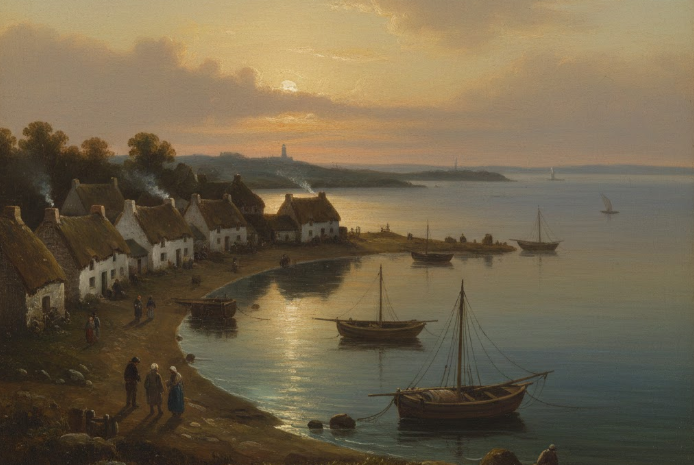
Artistic depiction of the village of the Irish slaves taken in the night.
Abandoned by those in power
The survivors immediately raised the alarm. Local men begged the Royal Navy to give chase.
The response?
No supplies. No pay. No action.
By the time help arrived, the ships were long gone — carrying the people of Baltimore towards slave markets in Algiers.
The anger afterwards turned into bitter blame-shifting between officials. But for the families left behind, it was already too late.
Irish slaves: Sold like cattle
In Algiers, the captives were paraded, chained and stripped, while buyers inspected them.
-
Men were beaten, tortured and forced into hard labour or galley slavery.
-
Women were highly prized and often sold as concubines.
-
Children were taken from their parents, converted to Islam, and raised to serve the Ottoman state or wealthy households.
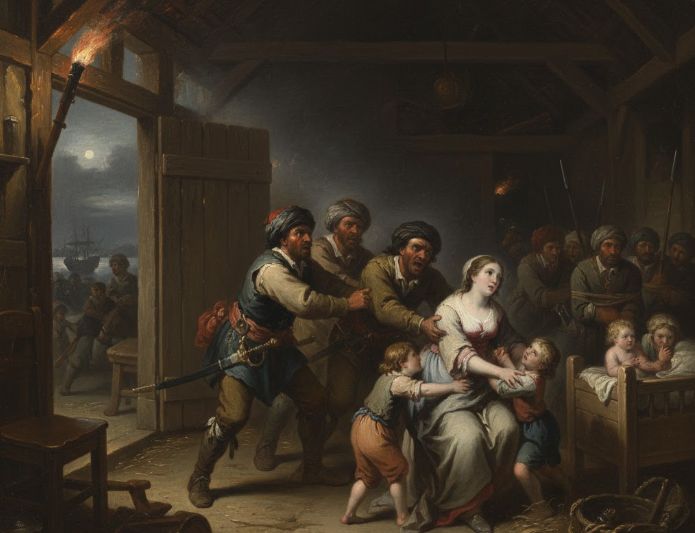
Artistic depiction of Irish slaves taken to Algiers.
Some children were treated kindly. Others were mutilated or broken. Many simply disappeared from the record.
Ransoms were possible, but expensive. And the English government had decided not to pay.
Within two years, officials reported that most of the Baltimore captives were dead or had “turned Turk”, meaning they had converted and assimilated to survive.
How many Irish slaves came home?
Very few.
We know of two women who returned after 15 years in captivity. The fate of more than 100 others is unknown.
Some may have risen to positions of influence in North Africa. Others likely died anonymous deaths from overwork, illness or despair.
What they all shared was this: They were ordinary people, caught in a global power struggle between empires, and completely expendable.
Irish slaves: The silence that followed
Baltimore never truly recovered. Many survivors fled inland to places like Skibbereen, terrified the corsairs would return. By the late 1700s, Baltimore was described as a rotting village. And the story? It faded too.
Why this matters
Ireland remembers famine ships and penal laws, rightly. But the Sack of Baltimore reminds us that Irish people were once trafficked, sold, and erased, and that political convenience mattered more than human life.
This wasn’t ancient history. It happened to people whose descendants still live in West Cork.
And yet, most of us were never told. That, too, is part of the injustice.


