Donal Óg: It has no named author. It has no known date beyond a rough guess of the 17th century, yet it could be centuries old. And yet Donal Óg, a young woman’s lament for a faithless lover, reads like it was written last week.
This is not a song that gets taught in schools or quoted at weddings. It does not have the institutional polish of Irish cultural works like Pangur Bán or the nationalist weight of The Foggy Dew. But for those who have stumbled across it, usually through Lady Augusta Gregory’s English translation, it tends to demonstrate that emotional depth has not changed across time.
Donal Óg: What the Song Says
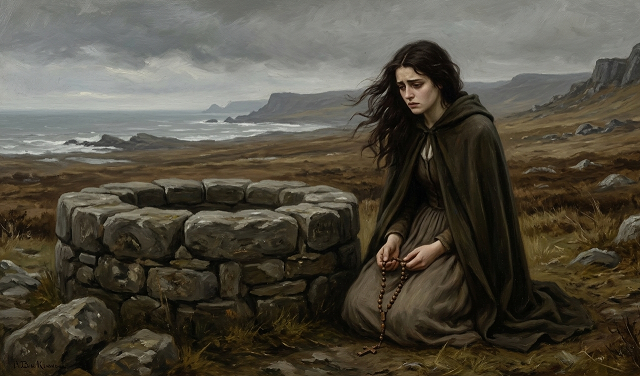
Donal Óg is an abandoned lover’s anguished lament. The speaker begs Donal Óg, Young Donal, to take her with him, recounting the impossible promises he made and broke, declaring she would do anything to stay near him, and ending in the most devastating line of all: that he has taken everything from her, including God himself.
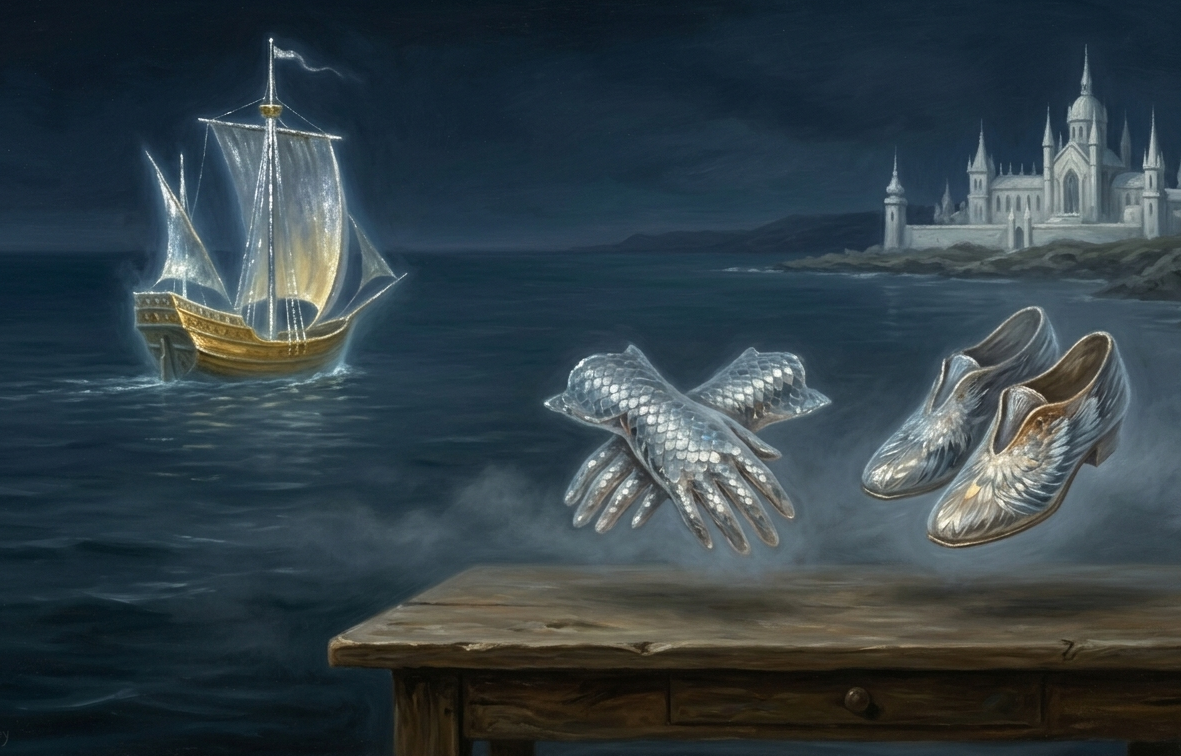
The imagery is strange and wild and utterly Irish. He promised her gloves made from the skin of a fish. Shoes made from the skin of a bird. A ship of gold under a silver mast. Twelve towns with a market in all of them. These are not realistic promises, they are the promises men make when they want something, grand and weightless and cruel in retrospect.
The unusual syntax lends it a striking rhythm and the repetition, you promised me; you promised me, makes it easy to memorise and hard to forget.
The Woman Who Rescued It
Lady Augusta Gregory was born in Roxborough, County Galway in 1852 and is regarded as the mother of Irish folklore. George Bernard Shaw described her as the greatest living Irishwoman. Alongside W.B. Yeats and Edward Martyn, she co-founded the Irish Literary Theatre and the Abbey Theatre in 1904.
Gregory travelled the country, learning Irish, sitting with ordinary people, including residents of the Gort workhouse, and writing down what they told her. She was saving a world that was disappearing in real time.
Her translation of Donal Óg from the Gaelic preserves much of the original’s grammatical structure. It does not read like a Victorian lady rendering an ancient text safe for parlour recitation. It reads raw. It reads like fury and grief sitting side by side.
One writer has called it a sinful, sexual and blasphemous piece of beauty. And we Irish women are okay with that.
Why Donal Óg Still Matters
The song is anonymous, which means we will never know her name. We know only that a woman in Ireland, from centuries ago, felt something so strongly she turned it into verse that survived invasions, famines, and centuries of neglect.
The name Donal Óg may possibly be traced to real historical figures. Or it may be that Donal Óg is every man who ever made a promise he had no intention of keeping. The song works either way.
Old Moore’s Almanac has long understood that the Irish relationship with time is not linear. The past is not behind us, it is underfoot, in the language, in the land, in the poems we carry without always knowing why. Donal Óg is one of those poems. A woman’s voice, reaching forward across hundreds of years, still perfectly clear.
Donal Óg, translated by Lady Augusta Gregory.
It is late last night the dog was speaking of you; the snipe was speaking of you in her deep marsh. It is you are the lonely bird through the woods; and that you may be without a mate until you find me.
You promised me, and you said a lie to me, that you would be before me where the sheep are flocked; I gave a whistle and three hundred cries to you, and I found nothing there but a bleating lamb.
You promised me a thing that was hard for you, a ship of gold under a silver mast; twelve towns with a market in all of them, and a fine white court by the side of the sea.
You promised me a thing that is not possible, that you would give me gloves of the skin of a fish; that you would give me shoes of the skin of a bird; and a suit of the dearest silk in Ireland.
When I go by myself to the Well of Loneliness, I sit down and I go through my trouble; when I see the world and do not see my boy, he that has an amber shade in his hair.
It was on that Sunday I gave my love to you; the Sunday that is last before Easter Sunday. And myself on my knees reading the Passion; and my two eyes giving love to you for ever.
My mother said to me not to be talking with you, today or tomorrow or on Sunday; it was a bad time she took for telling me that; it was shutting the door after the house was robbed.
My heart is as black as the blackness of the sloe, or as the black coal that is on the smith’s forge; or as the sole of a shoe left in white halls; it is you put that darkness over my life.
You have taken the east from me, you have taken the west from me, you have taken what is before me and what is behind me; you have taken the moon, you have taken the sun from me, and my fear is great that you have taken God from me.