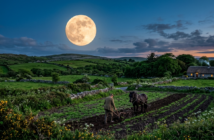
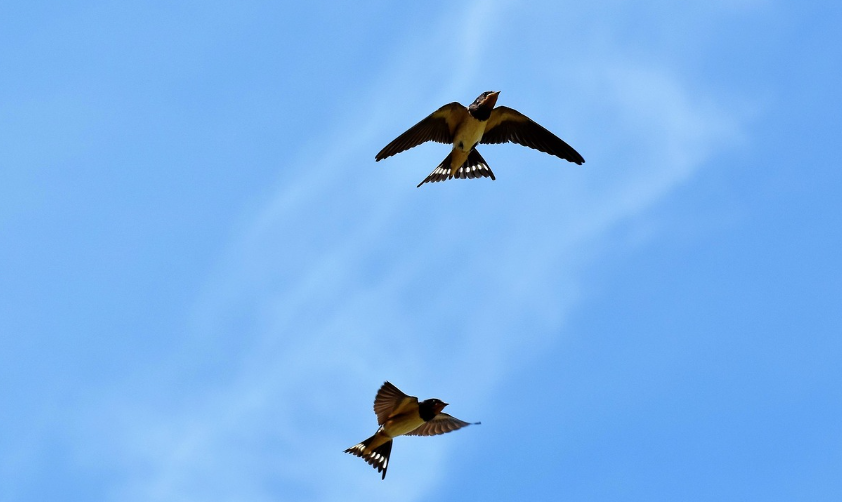
The First Swallow: There is a moment in late April, usually sometime between the 18th and the end of the month, when someone in a townland will look up and say it. “I saw the first swallow today.” And just like that, something shifts. The long wait is over. Summer is coming.
The swallow is one of the most awaited arrivals on the Irish calendar. Each year, these small, fork-tailed birds make an extraordinary journey of roughly 10,000 kilometres from their wintering grounds in sub-Saharan Africa, crossing the Sahara desert, the Mediterranean, and the length of Europe before arriving on Irish shores. They do this on wings that span barely 33 centimetres. It never gets less remarkable.
The First Swallow: When Do They Arrive?
The first swallows typically reach the south of Ireland in mid-to-late April, with sightings gradually moving northward through the final week of the month. By early May, they are widespread across the country. Cork and Wexford tend to record the earliest arrivals, as birds make landfall after crossing the Bay of Biscay and tracking up along the Atlantic coast.
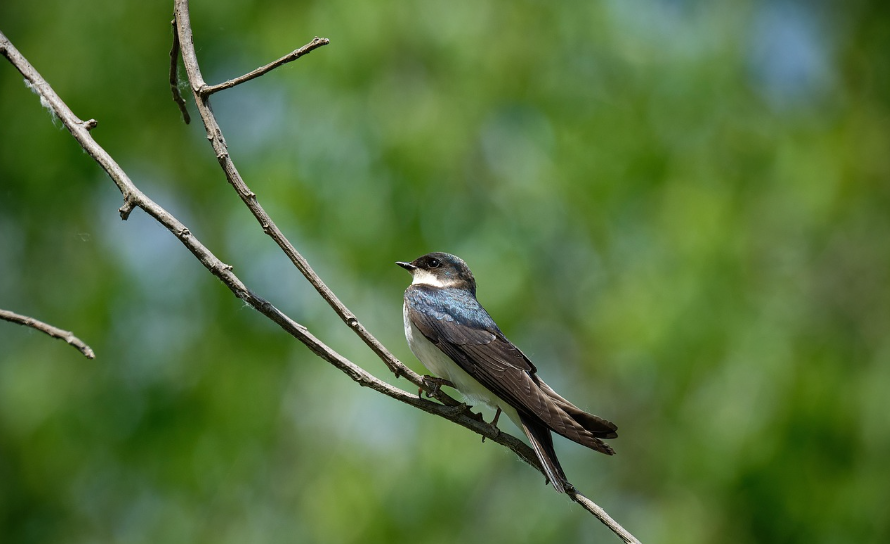
If you want to spot one, look low. Swallows fly close to the ground and water when feeding, swooping after insects with extraordinary agility. They favour open farmland, lake edges, rivers, and, famously, the interiors of old barns and outhouses, where they nest on beams and ledges. The distinctive long tail streamers and the rust-red throat are your identifying markers. You will usually hear the bright, chattering song before you see the bird.
What the Swallow Meant to Irish Farmers
For centuries, before weather apps and almanacs, the swallow’s arrival was practical intelligence. It told farmers things they needed to know.
The swallow feeds entirely on flying insects, and it will not appear in numbers until there are enough of them in the air to make the journey worthwhile. Their arrival therefore signalled that the soil was warming, that the insect life was waking up, and that the worst of the cold was behind them. It was, in short, a biological confirmation that it was safe to begin the heavier outdoor work, to plant tender crops, to move livestock back to higher ground, and to start the labour-intensive tasks that could not be risked in a late frost.
There was a saying in many parts of rural Ireland: “One swallow does not make a summer”, a phrase so embedded in the culture that it survived into everyday speech long after most people stopped farming. It was a genuine warning against overconfidence. One early bird, pushed north on a warm southerly wind, did not mean the season had turned. Wait for the second and third sighting, the older farmers would say, and then believe it.
The First Swallow: The Folklore
The swallow carries a remarkable weight of folk belief in Ireland, much of it protective.
It was considered deeply unlucky to harm a swallow or disturb its nest. The belief was widespread that a swallow nesting in your barn or outbuilding brought good fortune to the household and, crucially, protected it from fire. To knock down a swallow’s nest was to invite disaster, milk would dry up, cattle would sicken, and the luck of the house would turn. Children were taught from an early age to leave the nests alone.
In some parts of Connacht, it was said that swallows carried a small stone in their gullet, the “swallow stone”, which had healing properties and could cure eye ailments. This belief was ancient and widespread across Europe, not unique to Ireland, which gives some sense of how deeply the swallow was embedded in the folk imagination of the entire continent.
There was also a gentler belief, recorded in several counties, that swallows carried a drop of divine blood, which was why harming one was so strongly taboo. The robin shares a similar folk status in Ireland for related reasons, but the swallow’s protection was particularly associated with the home and farm rather than with individual people.
The swallow’s departure in autumn, usually by September, was watched just as carefully as its spring arrival. An early departure was read as a sign of a hard winter to come. A late departure was reassuring. Farmers read the skies the way we now read forecasts, and the swallow was one of their most reliable informants.
Watching for Them Now
If you are out walking in the second half of April, along a river, past a lake, through farmland, keep an eye on the sky just above ground level. When you see that first fluid, tilting silhouette, that effortless change of direction mid-air, you will understand immediately why people have been stopping to mark the moment for thousands of years.
The world has changed enormously since Irish farmers looked to the swallow for their seasonal cues. The bird has not. It is making the same journey it always made, navigating by the same stars, arriving in the same fields. There is something steadying in that, particularly in late April, when the Irish weather is still making up its mind and summer still feels like a promise rather than a fact.
One swallow does not make a summer. But it helps.