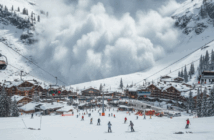
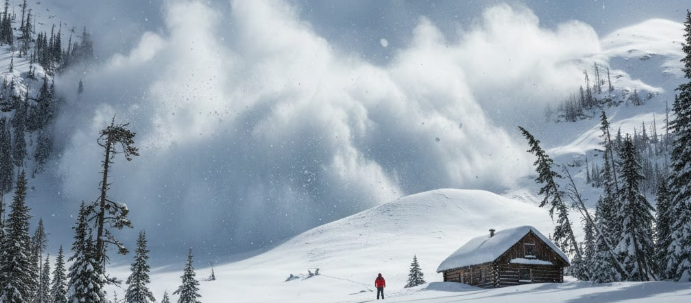
Avalanche clusters are unfortunately unfolding across Europe, making Old Moore’s dark prediction of 2026 ring true already.
Old Moore’s Almanac 2026, Ireland’s guide to celestial signs since 1764, pinpointed “avalanche clusters” as a defining hazard this year.
And already, this is unfolding, with tragic results. Waves of slides triggered in rapid succession across snowy slopes display that Europe’s peaks are proving Old Moore right.
Why do Avalanche clusters appear?
Avalanches can cluster in certain years when regional snowpack conditions become unstable across large areas. This typically occurs when weather patterns create weak layers of faceted crystals that get buried under heavy snowfall. Once this unstable structure forms across a mountain range, it can persist for weeks or months. This can set the stage for multiple avalanches whenever additional stress (from new snow, wind, or human activity) is applied. Climate patterns like El Niño or La Niña can influence entire seasons, affecting temperature, precipitation timing, and storm cycles in ways that make some winters significantly more dangerous than others.
Avalanche Clusters of 2026
Europe experienced a deadly avalanche cluster in mid-January 2026, with 17 deaths so far this year.
Footage of the incident is truly terrifying.
The Western and Northern Alps received 40-80cm of fresh snow in 24 hours, with some areas getting over a metre at higher elevations. This heavy snowfall bonded poorly with older snow after weeks of dry conditions, while strong winds created dangerous wind slabs on popular backcountry slopes.
When the first sunny day arrived after days of snowfall, many people ventured out despite avalanche danger reaching Level 4 (high) and even Level 5 (extreme) in some areas. These are conditions where even a single person can trigger large avalanches.
The Proof in the Powder
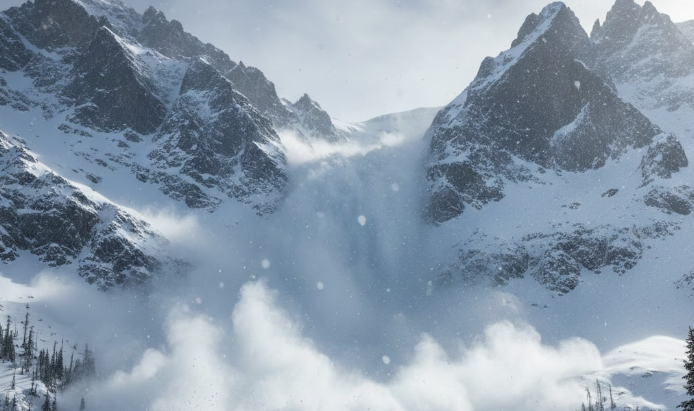
Barely into the year, clusters have cascaded from the Alps to the Caucasus, validating the prophecy with perilous precision. Key strikes from the past week:
- Mount Elbrus Cluster Kickoff (January 16): A massive slide engulfed the Elbrus Resort parking lot on Europe’s highest peak, swallowing cars amid a tourist exodus. No deaths, but the chaos—sparked by 50cm overnight snow—closed lifts and echoed prior instability, forming the week’s first cluster node.
- Swiss Alps Chain Reaction (January 13): Olympic snowboarder Ueli Kestenholz, 50, perished in a Lötschental Valley slide, his companion narrowly escaping as rescuers dug him out too late. This isolated trigger snowballed into regional alerts, with wind-loaded slopes primed for more in the cluster. Details here.
- Pyrenees Panic Pullout (January 11–12): Fresh 40–80cm falls unleashed multiple burials across France and Spain, stranding skiers. A frantic rescue included a skier coming across just an arm sticking out of the snow. The footage of the rescue is heart-stopping. The frenzy highlighted the cluster’s creep, with interconnected slides shutting sectors wide.
As European avalanche services warn of escalating risks through late January, Old Moore’s cluster call rings clearer.
Maybe you might want to forget skiing and go on a cruise this year? Perhaps not, there’s a prediction about cruise drama this year too. Perhaps a nice staycation in Ireland is in order, or just a cute holiday to the Algarve in Portugal.
Grab the 2026 edition for the full forecast!