
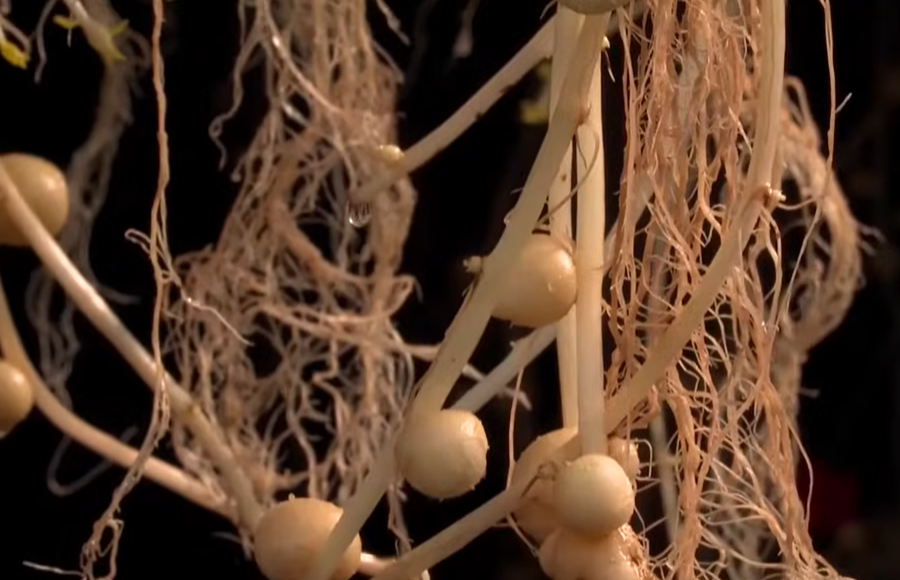
Aquaponic potatoes could be where your chips at your local chipper come from. That spice bag has come a long way.
Innovative farming techniques are redefining how we grow staple crops. Enter aeroponics. This is a soilless method that deliver nutrients directly through water or mist. It is quietly transforming commercial agriculture.
While leafy greens and herbs have long dominated these systems, root vegetables like potatoes are now staking their claim.
We now have potatoes grown in the air. Air spuds. Indoor farms are pioneering these methods to boost yields sustainably, blending high-tech precision with controlled environments.
Aquaponic potatoes: What is it?
Hydroponics is a soilless cultivation technique where plants grow in nutrient-enriched water solutions, with roots suspended in or periodically flooded by the medium. Aeroponics takes it further, misting roots with a fine nutrient spray in an air-filled chamber, maximizing oxygenation and efficiency. Both eliminate soil, relying instead on precisely balanced mineral solutions to feed plants, circulated via pumps and monitored by sensors.
Imagine this: Roots dangle in trays or towers, absorbing tailored nutrients like nitrogen, phosphorus, and potassium from recirculating water or mist. Beneficial bacteria and pH controls ensure optimal uptake, while LED lights and climate tech mimic ideal conditions.
Unlike traditional methods, these systems use data-driven automation for year-round production to create resilient, high-output farms.
Aeroponics for Potatoes: From Tubers to Towers
Potatoes pose unique challenges in soilless systems. As root crops, they need space for tubers to develop without rotting in saturated conditions. Traditional soil farming exposes them to pests, diseases, and erratic weather, but hydroponic and aeroponic adaptations are proving game-changers.
Seed potatoes are planted shallowly, with vines growing upward toward lights. The system’s nutrient solution bathes the roots in controlled cycles, fostering robust growth without waterlogging. Harvests are in 10-12 weeks from varieties like Yukon Gold.
Potatoes in these systems are gaining traction worldwide, with experiments yielding high tuber counts in nutrient-optimised environments.
The Advantages of Hydroponic and Aeroponic Potatoes: Sustainability Meets Efficiency
Why go soilless for potatoes? The benefits stack up like tubers in a harvest basket, outpacing soil-based farming in key areas.
| Advantage | Description | Impact on Potato Production |
|---|---|---|
| Water Efficiency | Recycles 90-95% of water via closed loops, versus 200-300 litres per kg in traditional irrigation. | Ideal for water-stressed China; one system sustains thousands of plants with minimal input. |
| Higher Yields & Faster Growth | Tailored nutrient solutions accelerate root development; plants grow 20-30% quicker. | Tubers mature in 8-12 weeks, yielding 20-50 kg/m²—double soil averages in controlled setups. |
| Organic & Pest-Resistant | No chemicals; controlled environments curb diseases like blight. | Cleaner, premium potatoes fetch higher market prices. |
| Space & Land Savings | Vertical integration suits urban farms; no tillage needed. | Enables year-round production in 1/10th the land, vital for China’s 1.4 billion mouths. |
| Environmental Resilience | Buffers climate extremes. | Adapts to floods/droughts, ensuring stable supply amid global warming. |
Aquaponic potatoes: A Tuberous Future Awaits
As hydroponic and aeroponic potato farms scale, from research chambers to billion-dollar vertical metropolises, the world watches. This isn’t just about growing spuds; it’s a blueprint for feeding billions.
For young Irish farmers: Grow smart, harvest plenty. We all love a spice bag, so get on that.