Brehon Law is a fascinating part of Ireland’s history, especially when it came to marriage laws. Ireland and divorce have a complicated history. It was banned outright until 1996, a fact that still feels recent. But wind the clock back further, past the Church, past the English conquest, all the way to the Ireland governed by ancient Brehon Law, and you find something remarkable: Irish women had one of the most progressive sets of divorce rights anywhere in the medieval world.
And yes, a husband getting too fat to have sex was explicitly on the list.
What Was Brehon Law?
Brehon Law was the native legal system of Ireland, predating Christianity and governing Gaelic life for roughly two thousand years. As Old Moore’s has previously covered, it was by many accounts the oldest and most sophisticated indigenous legal code in medieval Europe, memorised in poems by trained judges called Brehons, recited in open-air courts, and enforced by the community itself rather than any police force.
It was dismantled by the English in the early 1600s and declared, in Elizabeth I’s time, to be “old, lewd, and unreasonable.”
Brehon Law: The List
Under Brehon Law, a woman could legally divorce her husband and leave with her property, her dowry, and a share of what her own labour had contributed to the household. The grounds included:
He struck her hard enough to leave a mark. A husband was technically permitted to “correct” his wife physically, a grim concession to the era, but if the blow left a visible blemish, she was entitled to her full bride-price in compensation and the right to walk out that day.
He failed to provide food and support. The duty of maintenance was not optional. Fail it, and she had every legal right to leave.
He spread false stories about her. Gossip and slander were divorce-worthy offences. His reputation in the community was not worth more than hers.
He wrote or circulated a satirical poem mocking her. This one deserves a moment. In ancient Ireland, poets held enormous social power and a well-crafted satire could genuinely destroy a person’s standing. Using that weapon against your own wife was, under the law, grounds for immediate divorce.
He tricked her into marriage through sorcery or deception. Consent mattered. If it was obtained fraudulently, the marriage had no legal standing.
He refused to sleep in her bed. The law’s phrasing was “if he spurned her.” A husband who consistently withheld intimacy was in breach of the marriage contract.
He was impotent, sterile, or preferred his male servant’s company to hers. All three are listed in the surviving legal texts as valid grounds.
And Then There’s the Fat Husband
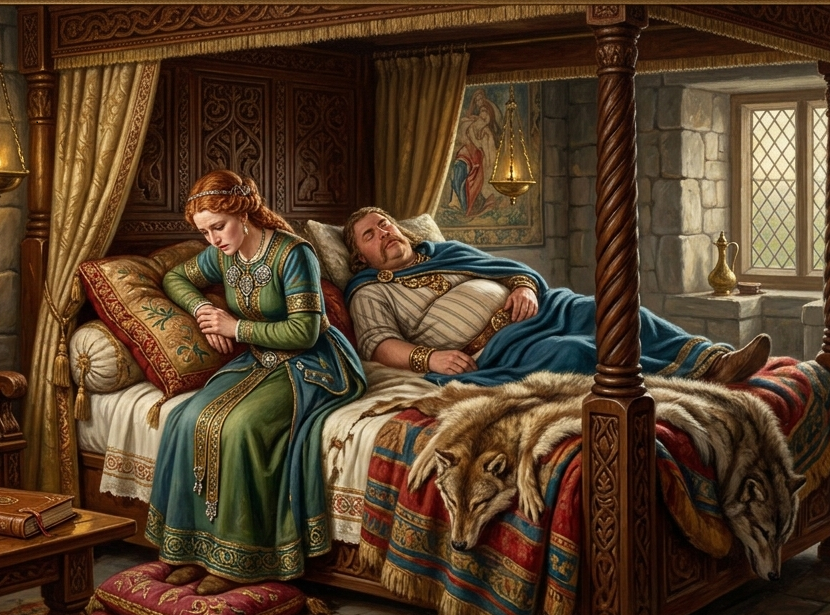
Here it is, plainly stated in Brehon legal texts: a woman could divorce her husband if he had become too fat to have sex with her.
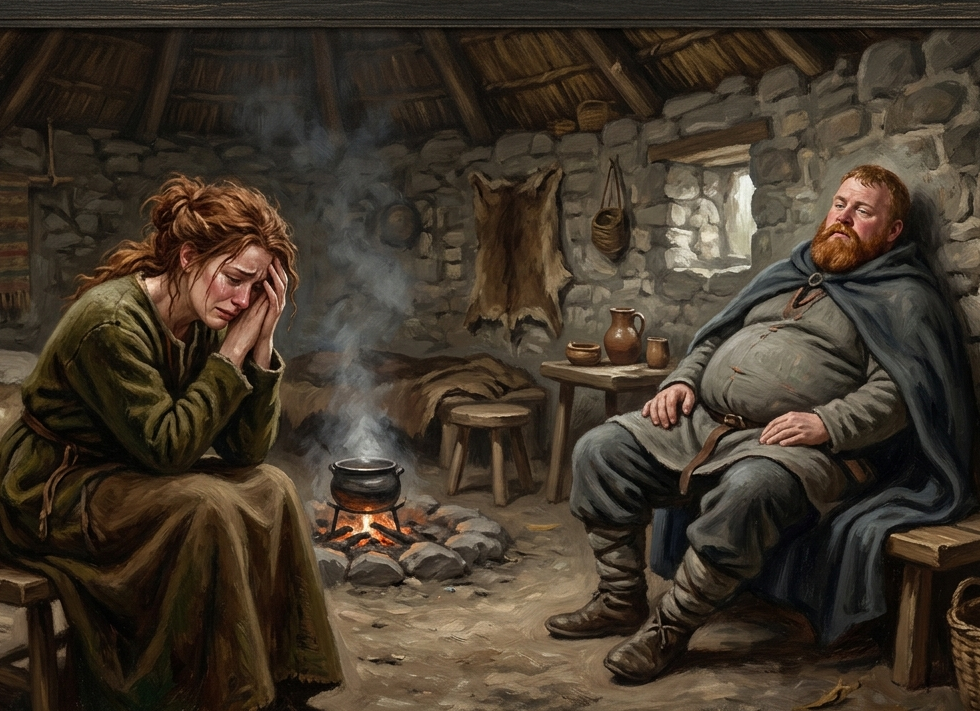
Not metaphorically. Not as a euphemism. The law recognised that a husband’s physical incapacity, including obesity, constituted a failure of the marriage contract, and that a wife was not obliged to remain in a union where that contract had collapsed.
It is, admittedly, the most immediately quotable clause in a very quotable body of law. But it sits alongside serious, considered protections, against violence, against slander, against abandonment, that paint a picture of a legal culture genuinely invested in women’s welfare within marriage, in ways that would not be seen again in Ireland for centuries.
What She Left With
When a woman divorced her husband under Brehon Law, she did not leave empty-handed. She took everything she had brought into the marriage. She took everything her husband had settled on her at the time of the union. And she took a portion of the shared household wealth calculated according to how much her own labour had contributed to it, if she had processed wool or flax, the share she was owed was calculated at each stage of preparation. Idle women received nothing extra. Women who had worked were compensated in proportion to that work.
The law was explicit: “If they divorce by mutual consent, let them divide their property in accordance with legal propriety.” That sentence was written in the seventh century.
Everything Changed
All of it ended with the completion of the English conquest of Ireland around 1601. Brehon Law was abolished, English common law and Church canon law took its place, and the legal protections described above vanished.
Divorce in Ireland became, for the next four hundred years, essentially impossible. It did not return until 1996, the last country in the EU to legalise it.
The next time someone tells you Ireland has always been conservative about marriage, you might point them to the clause about the fat husband. It has been there, in the ancient law texts, all along.