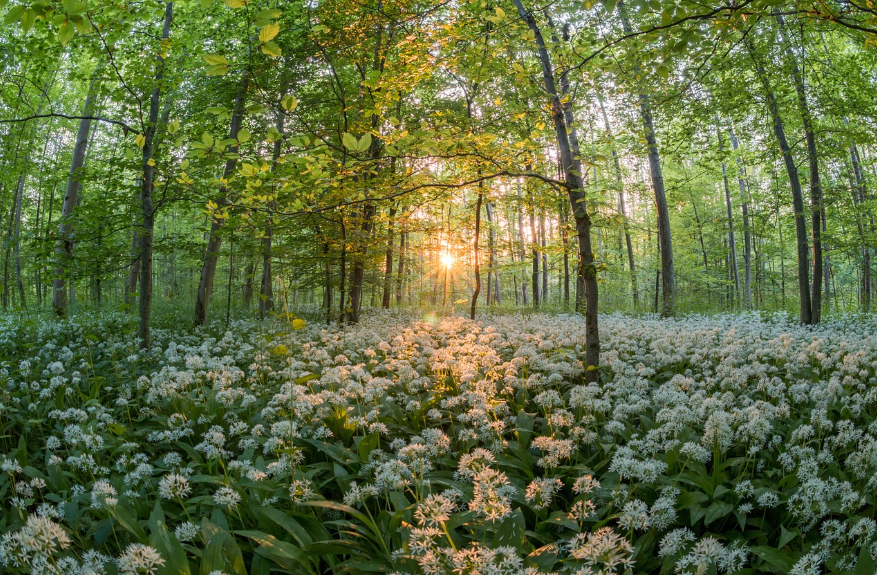
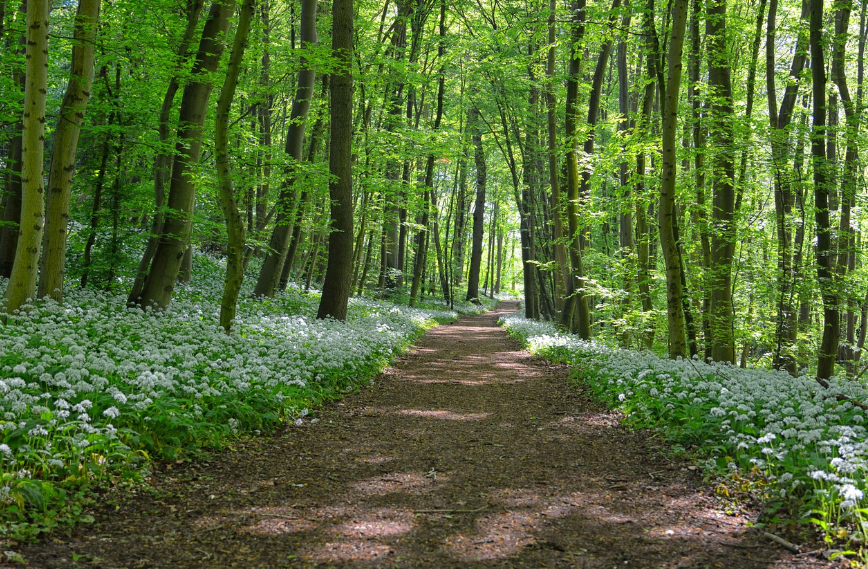
Wild garlic is April’s speciality. Why? Because there is a particular moment in late April when you smell it before you see it. You are walking a woodland path or following a hedgerow along a damp field, and something shifts in the air: green and sharp and unmistakably garlicky. Then you round a bend and there it is: a white carpet stretching through the trees, thousands of star-shaped flowers covering the ground in every direction. Wild garlic is in season, and if you know what you are doing, you are about to eat very well indeed.
Wild garlic, known in Irish as creamh, a word that appears in place names across the country, is one of Ireland’s most generous wild plants. It is abundant, it is free, it is delicious, and for a few weeks in spring it is everywhere. The season runs roughly from March through to May, with late April representing the sweet spot when both the broad, tender leaves and the white flowers are available simultaneously.
Wild Garlic: Where to Find It
Wild garlic loves damp, shaded ground. In Ireland, that means ancient woodland floors, the banks of streams and rivers, sheltered hedgerows, and the edges of bogs. Anywhere with consistent moisture and tree cover is a good candidate. It spreads in dense colonies, so once you find one plant, you will invariably find hundreds.
Some of the best foraging ground in Ireland includes the woodland walks of Killarney National Park in Kerry, the river valleys of West Cork, the Wicklow hills, the woods around Lough Derg in Clare and Tipperary, and the sheltered lanes of the Burren’s eastern edges. But the truth is that wild garlic is not rare. Once you start looking, you will find it in surprising quantity along country lanes and riverbanks throughout the country.
The Woodland Trust and various Irish foraging groups have noted a broad distribution across all four provinces, with the heaviest concentrations in areas with ancient woodland or consistently damp, undisturbed ground.
How to Identify It Correctly
This is important. Wild garlic (Allium ursinum, also known as ramsons) has two plants that can grow nearby which are toxic and look broadly similar to the untrained eye. Lords-and-ladies (Arum maculatum) and lily of the valley (Convallaria majalis) both share the same damp woodland habitat and have similarly shaped leaves. Neither will kill you outright, but both will make you seriously unwell.
The identification rule is simple and reliable: crush a leaf between your fingers. Wild garlic smells powerfully and unmistakably of garlic. Lords-and-ladies and lily of the valley do not. If there is any doubt at all, do not eat it. There should never be any doubt, because the smell is that distinctive, but the rule bears repeating.
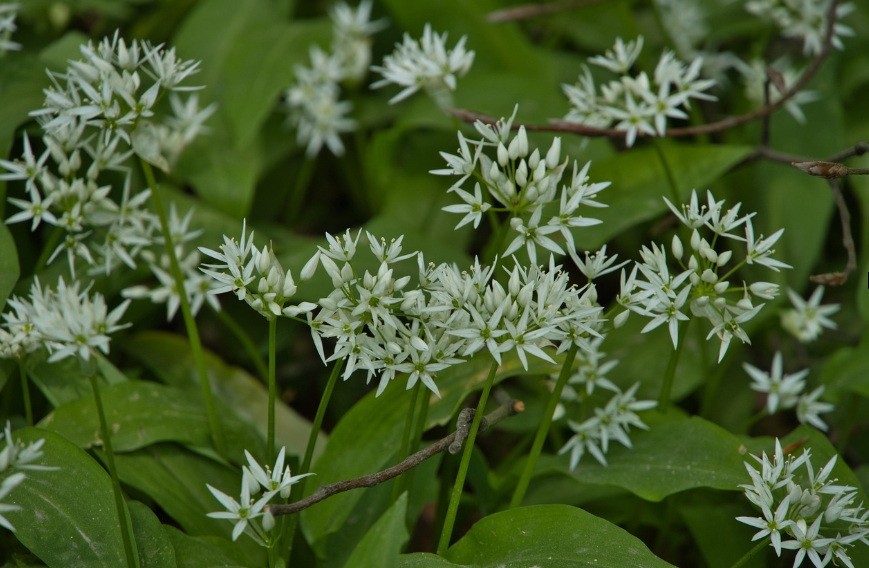
Other identification markers: wild garlic leaves are bright, vivid green and smooth, emerging directly from the ground without a central stem. The flowers are white, star-shaped, and appear in clusters on a single stalk from mid-April onward. The bulb, if you dig carefully, is small and white and smells strongly of garlic. Do not uproot the bulbs, it is illegal under the Wildlife Act 1976 to uproot wild plants without the landowner’s permission, and it is also poor practice that damages the colony for future years.
Wild Garlic: Foraging Responsibly
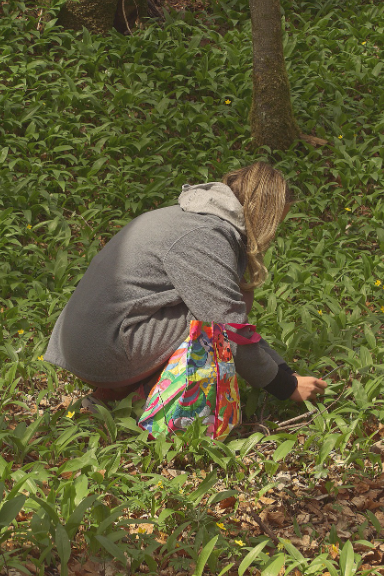
The principle most foragers follow is to take no more than a third of what you find in any one spot, and to spread your picking across the colony rather than stripping one area bare. Wild garlic is prolific, but heavy footfall and irresponsible harvesting can damage the woodland floor. Pick cleanly with scissors or a sharp knife rather than pulling, which disturbs the roots. Bring a paper bag rather than plastic, the leaves need to breathe.
Check that you are not foraging on private land without permission, and be aware that some nature reserves and national parks have restrictions on foraging. Killarney National Park, for instance, does not permit commercial foraging, though personal picking in small quantities is generally tolerated.
What to Do With It
Wild garlic has a flavour that is gentler than cultivated garlic, more like a cross between garlic and spring onion, fresh and green rather than pungent. Both the leaves and the flowers are edible. The leaves are best before or just as the flowers open, when they are at their most tender. The flowers make a beautiful garnish and have a milder, slightly sweeter flavour.
Here are two recipes that make the most of what the season offers.
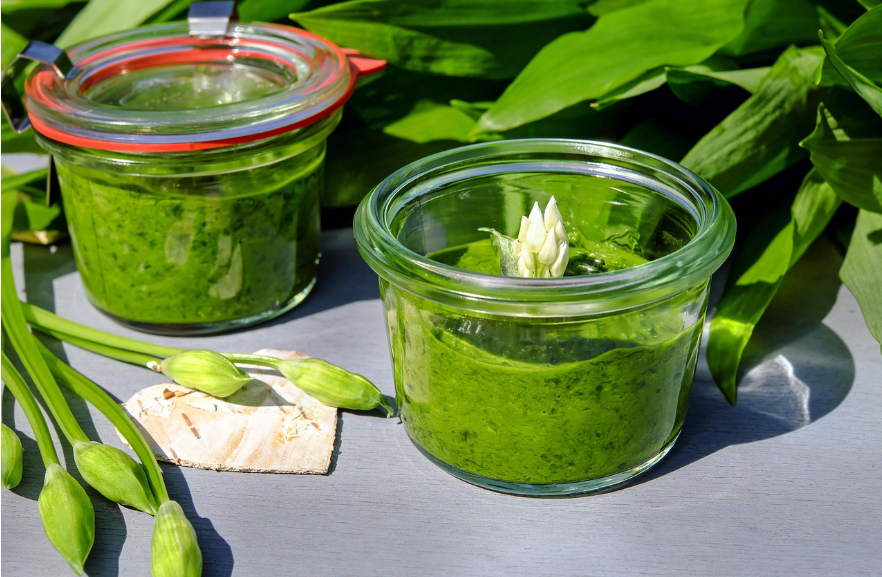
Wild Garlic Pesto
This keeps in a sealed jar in the fridge for up to a week and works on pasta, stirred through soups, spread on sourdough, or spooned over grilled fish or chicken. It is also the most forgiving recipe in the world, quantities are approximate and the whole thing takes about ten minutes.
Makes one medium jar
- 100g wild garlic leaves, washed and dried
- 50g Parmesan or Pecorino, finely grated
- 40g pine nuts, lightly toasted (walnuts work well too)
- 80-100ml good olive oil
- Juice of half a lemon
- Salt and black pepper
Blitz the wild garlic leaves, cheese, and nuts in a food processor until roughly chopped. With the motor running, pour in the olive oil gradually until you reach a consistency you like. Some people prefer it chunky, others smooth. Add the lemon juice, taste, and season. Spoon into a clean jar and cover the surface with a thin layer of olive oil to prevent oxidation. Store in the fridge.
The flavour is vivid and fresh and very distinctly of the season. It tastes like April in a jar.
Wild Garlic and Potato Soup
This is old Irish food, quietly updated. The combination of potato and wild alliums has been a staple of the Irish spring diet for centuries. Creamh was eaten with butter and bread long before anyone was calling it foraging. This version is simple, creamy, and deeply satisfying.
Serves 4
- 1 tbsp butter
- 1 medium onion, roughly chopped
- 3 medium floury potatoes (Roosters work perfectly), peeled and diced
- 700ml good vegetable or chicken stock
- 100g wild garlic leaves, washed, plus a few flowers to garnish
- 100ml cream or crème fraîche
- Salt and white pepper
Melt the butter in a heavy-bottomed pan over a medium heat. Add the onion and cook gently for about eight minutes until soft and translucent, do not rush this step. Add the potatoes and stock, bring to a simmer, and cook for 15-20 minutes until the potatoes are completely tender. Remove from the heat, add the wild garlic leaves, and allow to wilt in the residual heat for two minutes. Blitz until smooth. Return to the heat, stir in the cream, season well, and serve with the flowers scattered on top and good brown bread on the side.
The wild garlic loses its raw sharpness in the heat and becomes something more rounded and savoury, still unmistakably itself, but gentler. It is the taste of the Irish spring in a bowl.
A Short Season
The wild garlic window is brief. By late May it will be fading, the leaves yellowing, the flowers gone to seed. This is part of what makes it worth paying attention to. It demands a kind of seasonal awareness that daily life does not always encourage. You have to notice it, go out and find it, and use it while it lasts.